Poditivity: Prashanth & Nymisha Leading A Founder Journey Built on Trust, Belief, and Shared Goals
When startups are discussed in classrooms, the focus often falls on ideas, funding, or product-market fit. What is spoken about less—yet shapes everything—is co-foundership. The story of Poditivity offers a rare, honest look at how two co-founders built not just a company, but a leadership partnership grounded in trust, complementary strengths, and shared responsibility.
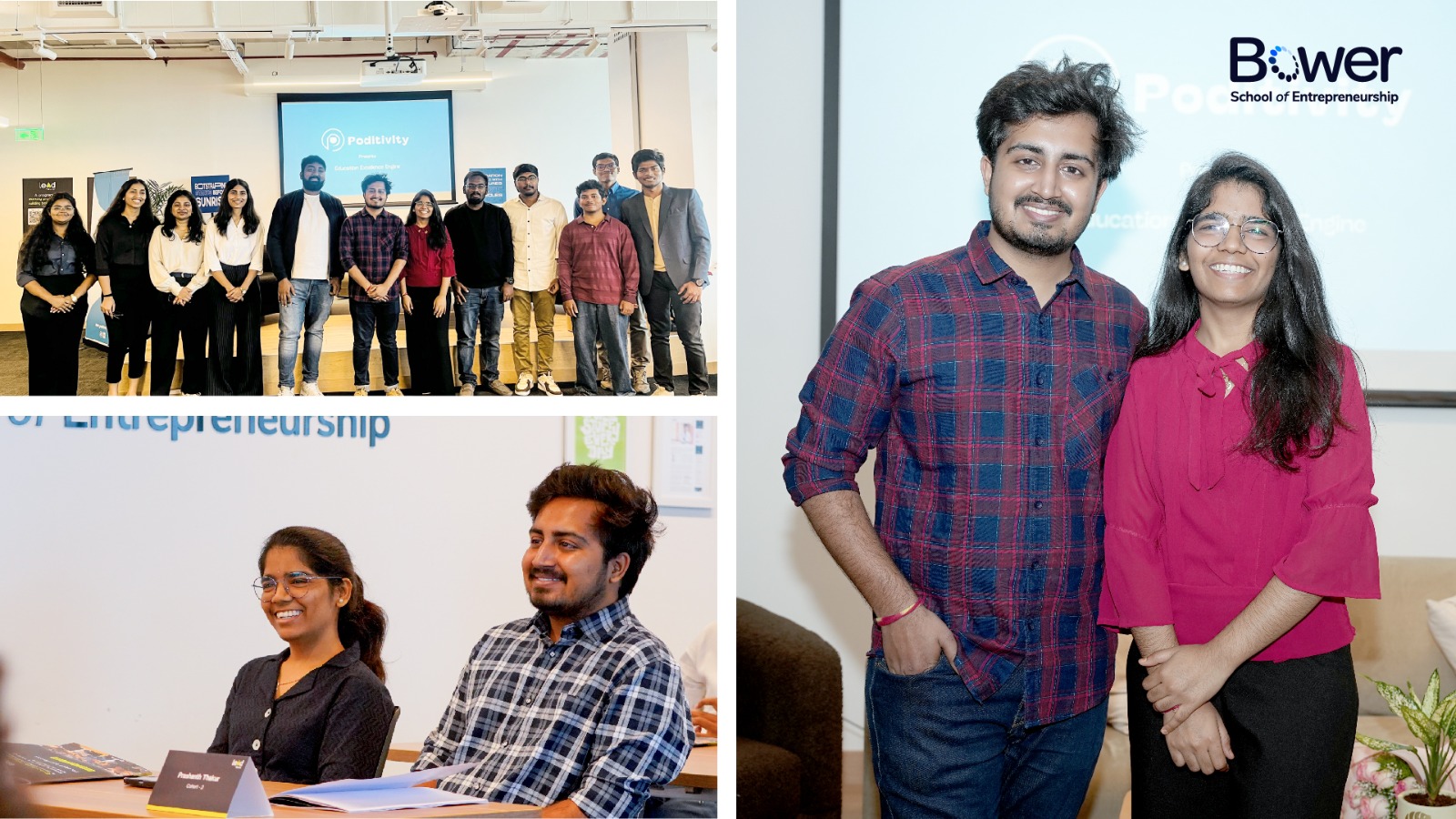
Founded by Thakur Prashanth with Devidi Nymisha joining as Co-Founder, Poditivity emerged from a deeply personal frustration with India’s higher education ecosystem and evolved through deliberate, sometimes uncomfortable, learning.
Finding Motivation in Challenges
Thakur Prashanth never intended to be an entrepreneur. Growing up in a smaller city, success followed a familiar trajectory—engineering, placement, stability. But during his college years, Prashanth began noticing a growing dissatisfaction among students like himself. Many students felt unsupported, not because colleges lacked intent, but because they lacked capacity. Faculties were stretched thin, mentorship was limited, and individual guidance was rare. The gaps stared even wider during the placement season when most of his peers could not get the kind of jobs their degrees could attract in a bigger city.
He reminisces, “(When)I started attending (placement) interviews, I realized something was missing. As I spoke with peers and faculty, I saw a bigger problem: students weren’t getting the guidance they needed, and colleges didn’t have the bandwidth to provide it. That’s when I began imagining a system that could help students discover their strengths and chart their own paths, while also supporting institutions; a platform that could really make a difference.”
This led him to discover a systematic imbalance at higher education institutions that he aspired to fix and from there began the brainstorming process for a solution that can not only help the colleges but also the students to identify and nurture their personal talents. And the idea of Poditivity slowly began taking shape.
Building the Idea into a Team
Once the idea began to take shape, Prashanth faced the next challenge: turning a vision into a real, functioning business. With a background in electronics engineering and minimal coding skills, he needed someone who could complement his strengths and help bring the technical side of Poditivity to life.
Through LinkedIn, he discovered Devidi Nymisha, a gold medalist computer science engineer from MVSR Engineering College, and a former Android developer at Infoedge India Limited. He reached out to her directly, offering her a co-founder role within the company. Within days, Nymisha saw the potential in Prashanth himself, even more than in the idea.
Nymisha reflects, “I took some time after talking with Prashanth, discussed with my family and friends, who questioned me if I was sure about joining a company that won’t be in a position to pay me initially. But I had a gut feeling that he would achieve something. I trusted him more than the idea, which also resonated with me as I had seen my peers facing the same struggles as Prashanth mentioned.”
Angel Investment and Validation
With Nymisha on board, the team began shaping Poditivity’s early framework. While the duo was still in the process of fine tuning their product, it attracted the attention of Santosh Varma, who, impressed with the idea, joined them as an Angel Investor and Advisor.
Prashanth proudly quips, “Till and unless a person has touched you with one rupee of their money, I personally believe that you are still a project to the world. So when we got that angel investment, it was huge for us that someone believed not just in the idea, but in us, enough to put money on the table.”
The team soon started growing with Nasigari Jitesh coming on board as an Advisor, with Prachothan supporting the company as Director. They also managed to hire some core founding team members who showed great trust in the company, including Vignesh, Vinuthna, Prerit, Abhiram, Shresta, Sameer in tech, and Visisht Jupudi and Meghana in the founder’s office. What formed was not just a startup, but a small group aligned around the same problem.
Going Back to the Drawing Board
Prashanth & Nymisha were working hard together and almost had an MVP ready, when a chance meeting with Srinivas Rao Mahankali (MSR) – a seasoned entrepreneur, former CEO of T-hub, and an integral part of the Bower team – introduced them to the LEAD program.
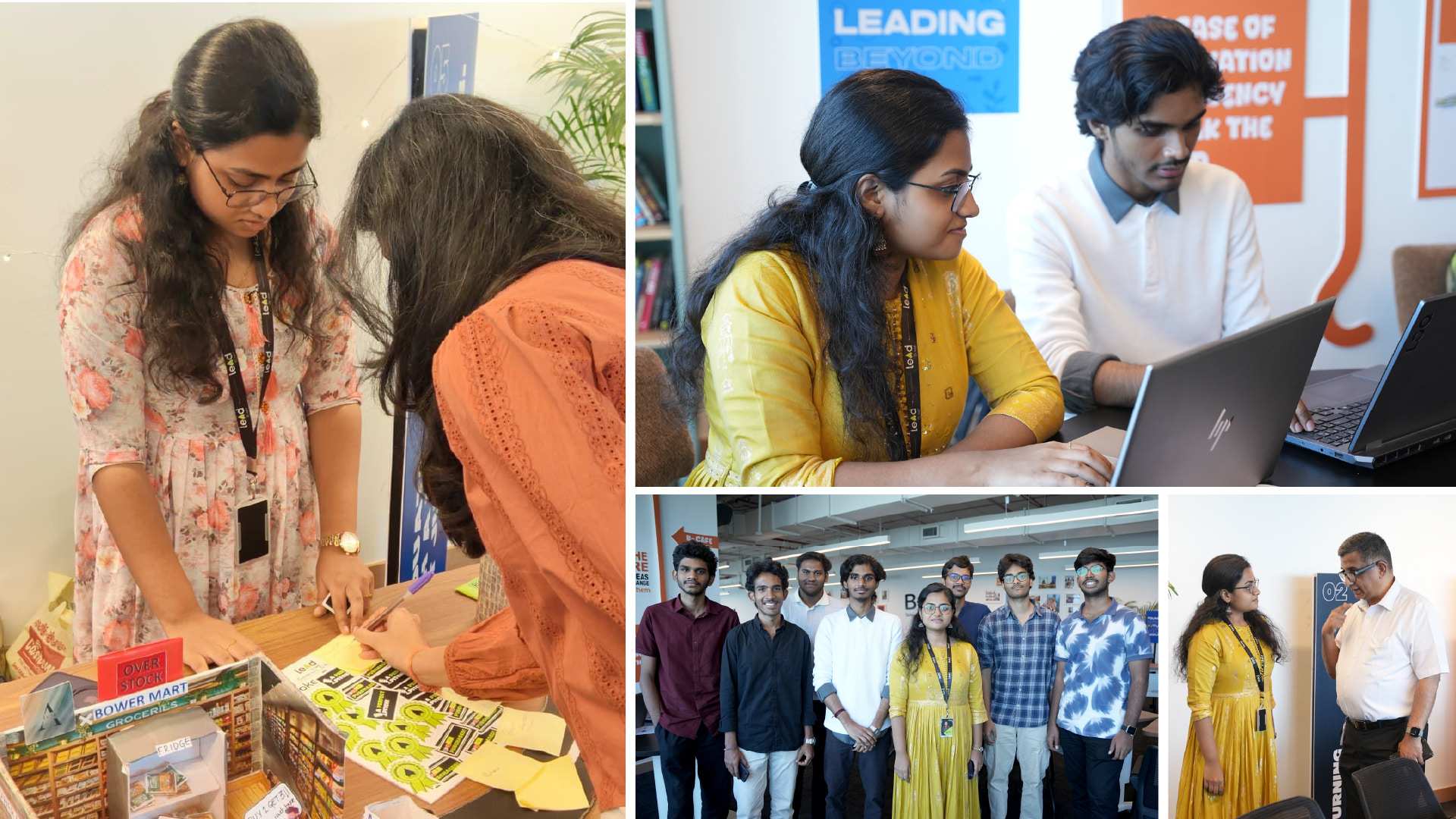
Prashanth’s early discussions with Pavan Allena, Founder of Bower School, gave him confidence in his idea and also prompted him to join the Venture Building Executive Program here. He also got Nymisha on board, who initially hesitantly agreed to give it a shot, once again believing in the conviction of her founder.
But the journey jolted them out of their success euphoria quickly. “On the second day itself, we already felt like failures,” Prashanth admits. “What we were building was not sellable.”
This made him panic, but Nymisha’s calm and composed outlook helped them pivot and redesign their product. She says, “What all features we were developing were good-to-have features but were not pain points for institutions. Initially, we didn’t have enough research to understand the real pain points of institutions. Once we dug deeper, we realized what they truly needed, which helped us pivot in the right direction.”
The outcome was Poditivity’s 3E – Educational Excellence Engine, and a crucial breakthrough: their first institutional client, with a school now planning to adopt the platform. “Bower not only made us build a product,” Prashanth says, “but also built it in such a beautiful way that they themselves are ready to purchase it.”
Why Poditivity Is Not an LMS
Both co-founders are clear that Poditivity is not another learning management system. Prashanth explains, “We are going beyond academics. We act as an extended college.”
Unlike traditional LMS platforms that digitise attendance, classes, and content, Poditivity focuses on student journeys—aspirations, milestones, skills, and verified proof of work.
Nymisha explains how this works at a system level. “Based on the student’s behaviour and preferences, everything is mapped to that student profile,” she says. Progress is tracked continuously, certificates are generated digitally, and skills are verified through multiple levels of attestation.
“For recruiters,” she adds, “we are giving a freshly verified talented student.” For institutions, it becomes a living view of student development rather than a static academic record.
“An LMS digitises work,” Prashanth says. “We are solving for outcomes.”
The Future is Promising
Prashanth and Nymisha are in no rush to make a big splash in the industry. In fact, Prashanth is brilliantly self-aware when it comes to the reality of his current product and the market expectations. “So many people tell us that it is the worst industry to build in,” he quips non-chalantly as it does not deter him from the goal he started with – helping students realise their potential and taking them there.
Therefore, they are currently focusing on fine tuning their product as initial clients join in. Prashanth shares that they would first expand in the Andhra and Telangana region, making the platform accessible to institutions across the tiers and helping the ecosystem before expanding further.
Their journey is a great reflection of what purpose, clarity, and belief can do for early-stage entrepreneurs. Both of them vouch for the value of great research when asked what young entrepreneurs should start with: “Do your research thoroughly before starting. Understand the problem deeply, talk to the people who face it, and make sure your solution actually solves something meaningful.”