Betting on Herself: Keerthana Zion Cherukuvada’s Leap from Code to Commerce with Invera
For most engineering students, the path from campus to career is straightforward: study hard, graduate, and secure a stable job. For Keerthana Zion Cherukuvada, a fifth-year dual-degree student at JNTUH, that was the plan too. She had mapped out her life like a perfect equation — study well, get into a good college, and become a software engineer.
But during one of her research projects, an unexpected question changed everything. “During COVID, people needed a second dose,” she recalls. “But after six to seven months, around 1.4 million vaccines had expired. Even now, there’s a lot of black market in vaccines for children and women. After all this technology, why are these problems still existing?”
That question became the seed of what would later turn into Invera, a B2B SaaS startup that helps businesses manage their inventory efficiently. The idea first took shape when she entered a blockchain-based pitch competition by Algorand. “I was supposed to give a problem statement, and I figured that blockchain can provide solutions for this because it brings trust and transparency throughout the supply chain.”
Her proposal was selected among the top 10 at the Algorand India Summit, and later incubated at T-Hub. With mentorship from both Algorand and T-Hub, she began exploring where this technology could be applied most effectively. Pharma was too tightly regulated for a student-led venture, so she chose to focus on something more immediate — retail. “We wanted to focus on the low-hanging fruit first,” she explains.
From Concept to Company
That decision gave birth to Invera — short for “new era of inventory.” The platform helps retail businesses prevent overstocking and understocking by analysing their real-time inventory. “We onboard their inventory and tell them which item is getting overstocked and which is understocked so that they can buy the right amount next time,” Keerthana explains.
Her system even suggests redistributing stock between stores to minimise waste. “If a product is overstocked in one outlet and understocked in another, we redistribute it instead of buying new stock,” she says.
The solution has already proven its worth. A major Hyderabad retail chain once struggled with unpredictable sales of readymade parathas — one store sold out quickly, while another barely moved stock. It was because the high-performing store was located in an area with more bachelor's and graduate students. “It took them six to seven months to figure that out despite being an established chain, and that’s where Invera helped by taking up the unused stock from the previous store and directing it to he one where parathas were quickly getting sold out,” she notes.
For smaller stores, the stakes are even higher. One local shop owner she met had to discard INR 20,000 worth of expired biscuits in a single week, losing INR 15 lakh within three months. “There are billions of families depending on these small retail chains, and already 2.5 lakh stores have shut down,” she says.
To support these retailers, Invera recently partnered with RetailSpark, a company that connects farmers directly to customers through local kirana stores. RetailSpark, founded by Baki Srundhan Reddy, has built a WhatsApp-based chatbot that allows customers to order groceries and vegetables at prices 30–40% lower than market rates. Invera integrates this chatbot into its platform to automatically track, update, and redistribute inventory across stores. “A lot of vegetables didn’t go to waste because of this,” Keerthana says. “Right now, we have five stores, and we’re planning for 20 to 30 by the end of November.”
Challenging the Safe Path
For someone raised in a family that valued stability, entrepreneurship was a dramatic shift. Her mother, a global SAP head at Tech Mahindra, and her father, a supply chain HOD, both built steady careers through years of disciplined work. “My parents always played it safe,” she says. “My childhood was safe, too. I never cross-questioned things. Education became my value.”
That deep belief in certainty made her first steps as a founder even more daunting. “I’m extremely scared of failure,” she admits. But the validation she received — first from mentors, then from customers — slowly built her confidence. “Once I understood that this problem is real and that customers are willing to take it, I thought I could fill this gap.”
There were gendered expectations, too. “People wanted me to do a nine-to-five job because it’s safe,” she says. “Because I’m a girl, they said it’s not safe to meet hundreds of people.” Her answer was simple: “I told them I’ll be safe. I’ll evaluate everything before I go and talk to people.”
A Turning Point Called LEAD
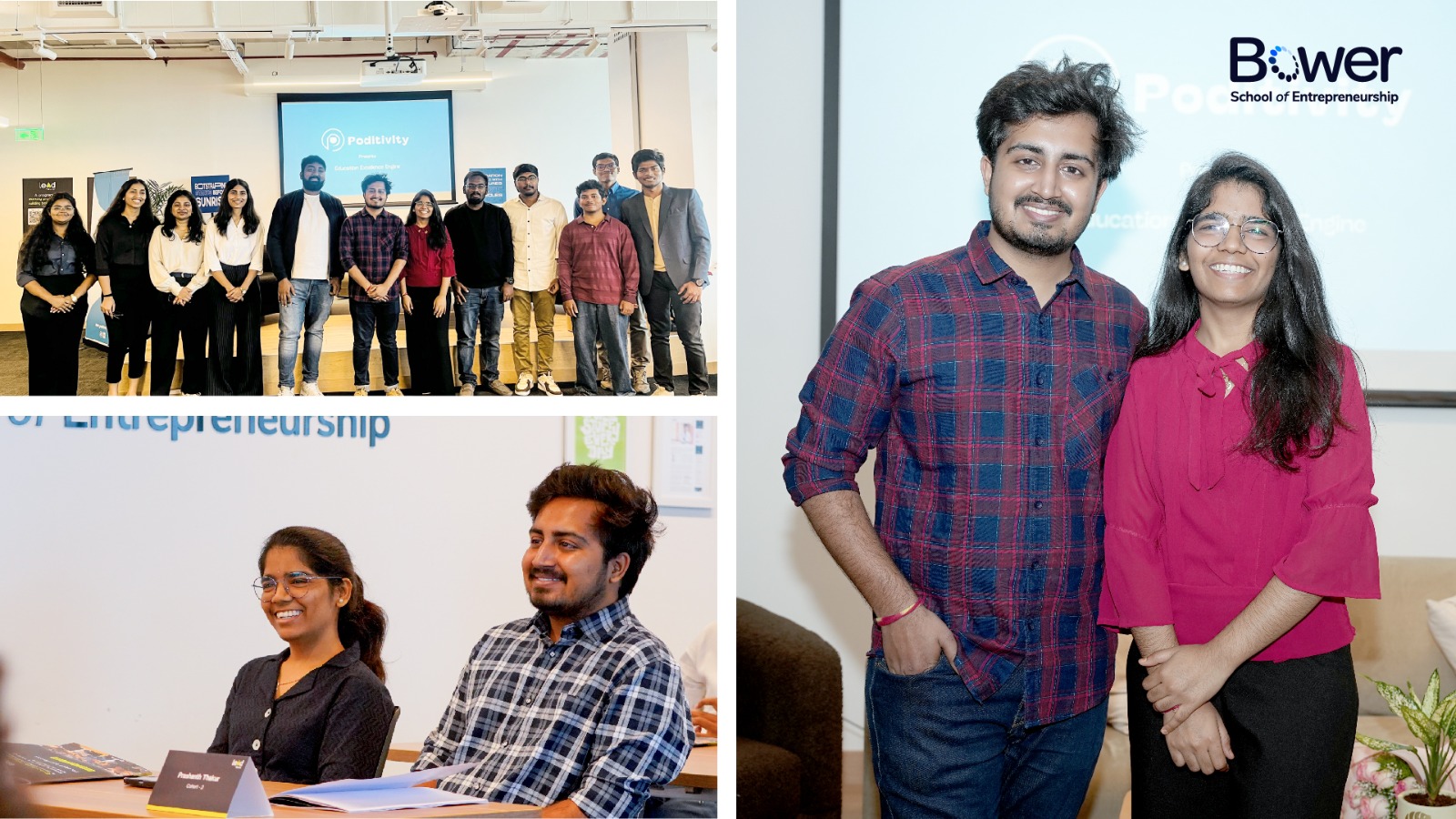
By early 2024, Keerthana was balancing her final-year exams and an early-stage startup when a friend forwarded her a message about a pitch competition at the Bower School of Entrepreneurship. “I didn’t know about Bower or LEAD,” she laughs. “I just went for the competition and got the best pitch award.”
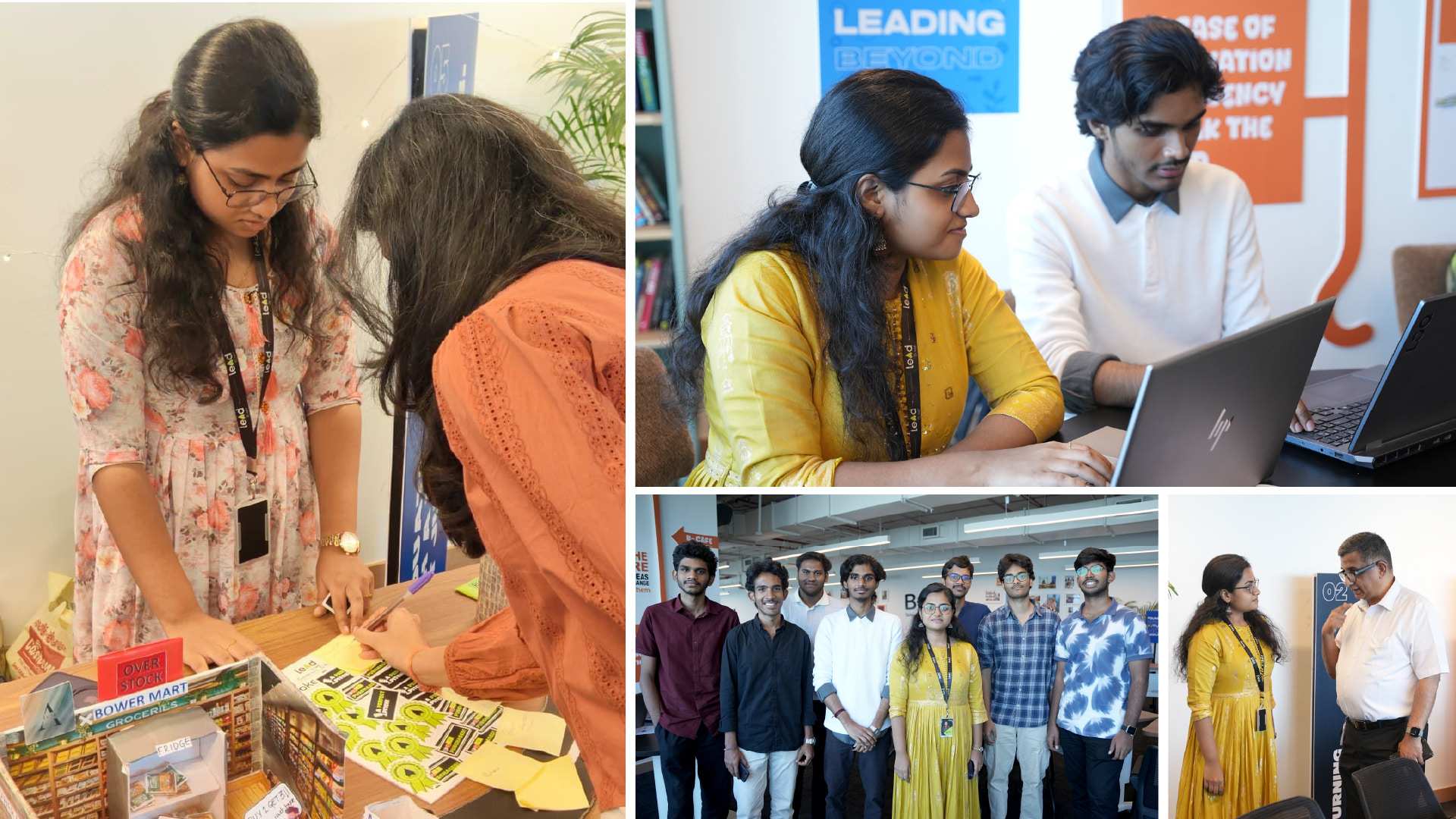
That event introduced her to the LEAD Programme, which supports young founders through structured mentorship and business training. Initially, she joined with modest expectations, unsure if she could manage the weekend sessions. But the experience soon became a turning point. “The first week itself changed everything,” she says.
Through LEAD, she learned to segment her customers and design a clear go-to-market plan. “They made me believe I can do it,” she recalls. The programme also connected her with experienced founders and mentors who guided her early business decisions. Among them was Pavan Allena, founder of the Bower School of Entrepreneurship, who introduced her to Vijetha Stores, one of the first adopters of Invera’s platform.
LEAD also became the bridge to one of her most strategic collaborations. Through the programme, she met Baki Srundhan Reddy, founder of RetailSpark, whose chatbot technology now powers Invera’s integrated inventory and delivery system. The collaboration not only expanded Invera’s reach but also demonstrated how the right ecosystem can accelerate a founder’s growth.
The experience taught her what every entrepreneur eventually learns: the importance of collaboration. “I thought I could manage everything on my own,” she says. “But once I started delegating, things started moving quickly. Good people make a difference.”
Looking Ahead
Keerthana now aims to onboard 50–70 stores by the end of the year. Long-term, she wants to master the retail vertical before expanding into manufacturing and, eventually, the pharmaceutical supply chain — the problem that started it all. “There are existing options of software,” she points out, “but why is the black market still happening? I want to do proper research and then enter pharma management.”
Her journey has transformed not just her career path but her sense of self. “Even if you work 24 hours a day, the satisfaction of building something on your own makes you believe in yourself more,” she says. “We need more women entrepreneurs. Even if you have to work twice as hard, do it. Convince your parents. Prove to them you can do it.”
For Keerthana Zion Cherukuvada, entrepreneurship is no longer an accident — it’s a deliberate act of courage. And through programmes like LEAD, she’s discovering that sometimes, the biggest risk is not taking one.